How Desert Ecosystems Adapt to Extreme Conditions
Published February 18, 2026 · American Nature Journal Editorial Team
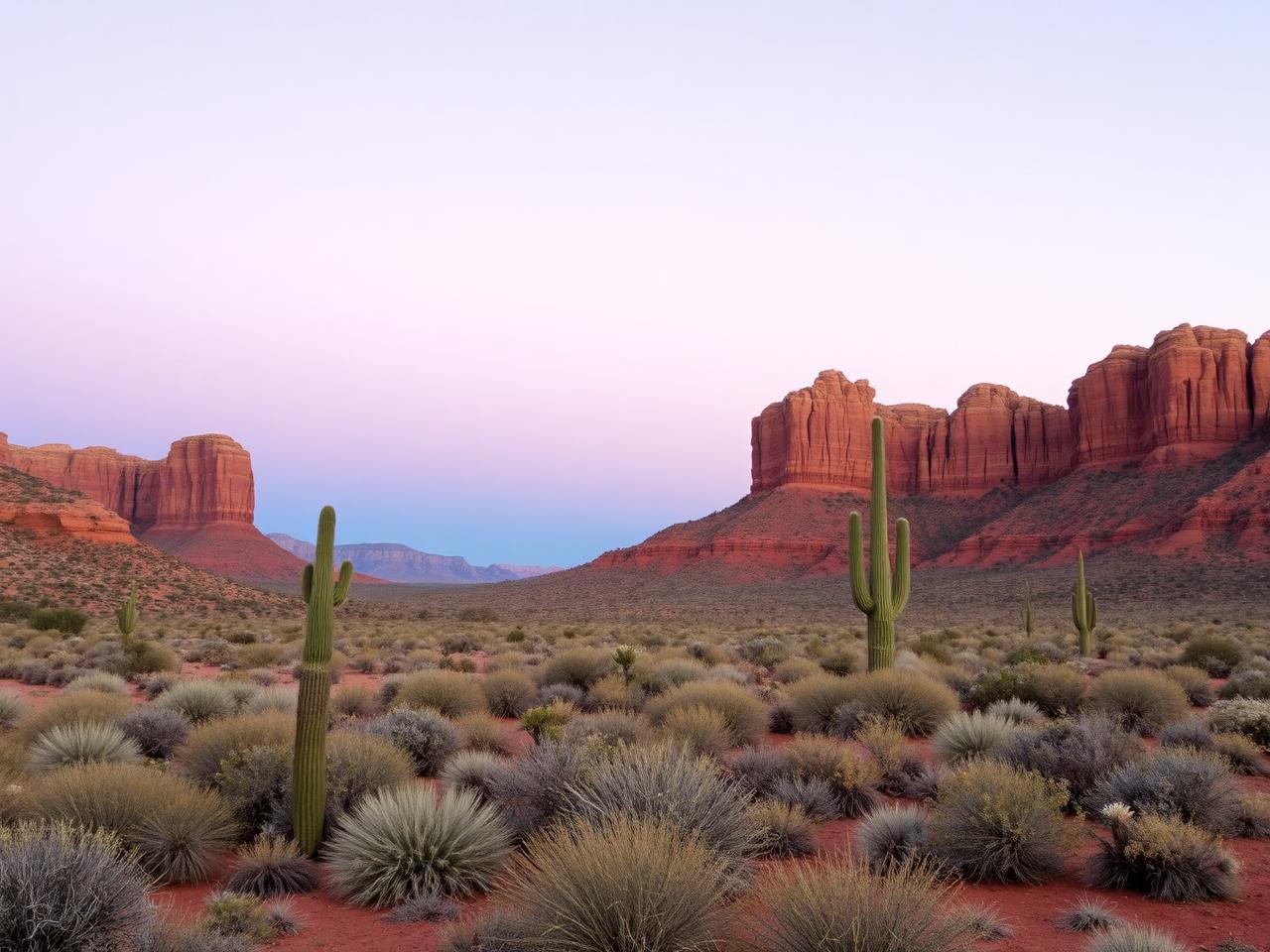
Deserts are defined by low precipitation rather than by heat alone. In the United States they include hot deserts in the south and a cold desert in the Great Basin.
Plant strategies
Some desert plants store water in thick stems, while others reduce leaf area to limit evaporation. Deep or wide root systems capture water from occasional rainfall.
Annual wildflowers can remain dormant as seeds and complete their life cycle quickly after enough rain falls.
Animal strategies
Many desert animals shift activity to night, dawn or dusk. Burrows offer cooler, more humid shelter during the hottest hours.
Some species obtain much of the water they need from their food rather than from drinking.
Visiting responsibly
Desert soils often carry fragile biological crusts that take a long time to recover, so stay on established trails. Carry sufficient water and plan around the hottest part of the day.
Images on this page are illustrative visuals produced for this site and do not depict a specific identified location unless stated.